Aid Nurse
A Registered Nurse (RN) is a licensed professional who provides medical care, supports recovery, and promotes overall health.
- SERVICES
- Aid Nurse
What Does a Aid Nurse Do?
overview
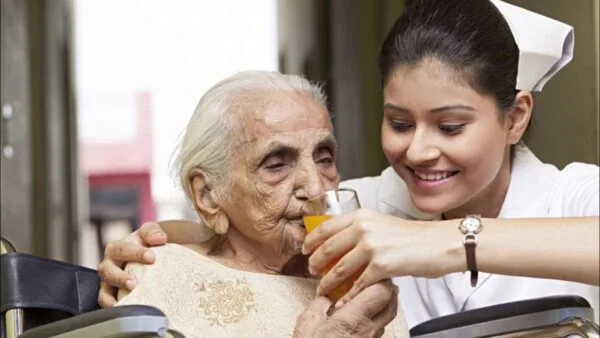
A Nurse Aid provides essential bedside support, focusing on the physical comfort and daily needs of patients who cannot care for themselves.
They serve as the “hands-on” help that ensures a patient’s environment is clean, safe, and dignified. They take basic measurements daily—such as temperature, pulse, and blood pressure—and report them to the Registered Nurse (RN) in charge.

Skills and Qualifications
- Professional Certification
A 2-year Diploma in Certified Nursing Assistant (CNA) from a recognized nursing institute.
- Core Clinical Skills
Vitals Monitoring: Precise recording of blood pressure, heart rate, temperature, and oxygen levels ($SpO_2$).
Infection Control: Mastery of sterile techniques, hand hygiene, and “Standard Precautions” to keep the home environment safe.
Role in Healthcare
Administering medications (oral), dressing wounds, monitoring vital signs, and assisting in minor clinical procedures.
Focus: Stable patients with predictable health outcomes. They handle the “practical” daily clinical needs.
Our services include:
- Coping with a chronic disease
- Recovering from an illness
- Dealing with the challenges of aging
- Need Alzheimer’s or Dementia care
- Total parenteral nutrition
- Internal feeding
- Infusion therapy
- Bowel and bladder management
- Medication Instruction And Management
- Disease Process Management
- Diabetic Management
- Anticoagulant Education And Monitoring
- Assessment
- Eternal Diet
- Foley Catheter Care
- Observing, reporting and documentation
- Nutrition- Serve And Assist Meals
- Exercise – Active And Passive ROM
- Transfer, Ambulation, Walker, Cane, Wheelchair, Toileting
- Taking vital signs (temp, pulse, blood pressures etc)
Core Responsibilities
Medication Administration: Safely giving oral medications, subcutaneous injections (like insulin), and intramuscular (IM) injections.
Vital Sign Analysis: Monitoring and recording blood pressure, heart rate, and temperature, with the ability to recognize abnormal clinical trends.
- Patient Preparation: Preparing patients for physical examinations or minor surgical procedures.
- Feeding & Hydration: Assisting with meal times and keeping accurate records of how much the patient eats and drinks.
- Environmental Safety: Ensuring the patient’s room is sanitized, the bed linens are changed, and the area is free of fall hazards.
- Mobility Assistance: Safe “log-rolling” to prevent bedsores and assisting patients with transfers from bed to wheelchair.
Why This Service Matters
Many patients in Pakistan are discharged “stable” but still require complex care. Without a professional:
Medical Errors: Families may struggle with complex medication dosages or IV timings.
Infections: Improper wound care or unsterile catheter management leads to secondary infections and costly emergency returns to the hospital.
Professional Solution: An Aid Nurse ensures that the hospital’s treatment plan is followed with clinical precision, preventing complications before they start.
Expert Monitoring in a Familiar Environment
Patients heal faster where they are most comfortable. However, “comfort” must be paired with “vigilance.”
The “Early Warning” System: Our staff is trained to spot the “silent” signs of trouble—a slight change in breathing, a subtle drop in blood pressure, or a new skin redness—acting as the patient’s 24/7 safety net.

Other Nursing Staff
Aid Nurse
Hospital-Grade Care, Right at Your Bedside.
Don’t Settle for Less When Seconds Count.